


Photo: Martin Grüner Larsen / Kruse Larsen
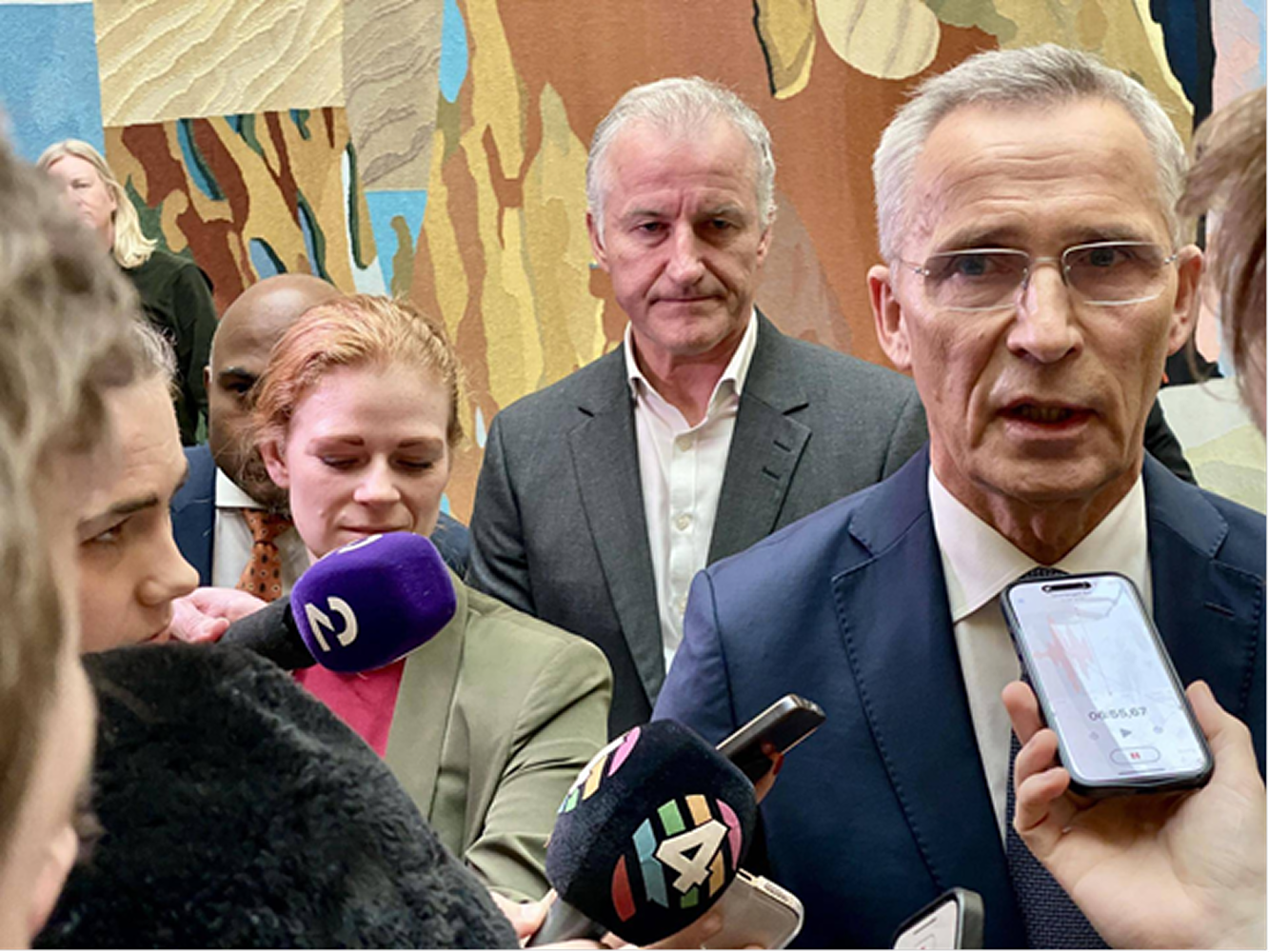
Minister of Finance Jens Stoltenberg presented the National Budget 2027 to Parliament on 7 October 2026. Defence and health are the budget winners. The Norwegian Government also used the opportunity to follow up on key energy policies, including the electricity and grid package.
Defence is one of the government´s main priorities in the 2027 budget. The budget continues the implementation of the revised Long-Term Defence Plan for 2025-2036, including the increased funding and revised priorities unanimously adopted by the Parliament in June 2026. The Government proposes an additional NOK 6.5 billion in 2027 for measures linked to the Long-Term Defence Plan.
Key priorities in the Long-Term Defence Plan being taken forward include the renewal of the Navy with new frigates and submarines, strengthened air defence, larger ammunition stocks, the build-up of the Finnmark Brigade and Brigade South, a stronger Home Guard, and increased emphasis on drones, autonomy and electronic warfare. The focus on drones reflects lessons from ongoing conflicts, including Ukraine, and follows up on the Government’s drone strategy. The Government also proposes to strengthen the Norwegian Intelligence Service by approximately NOK 400 million.
Of Norway’s overall support to Ukraine, NOK 70 billion is allocated to the defence budget. Including military support to Ukraine, Norway’s defence expenditure is estimated at 3.4 per cent of GDP on defence, close to NATOs target of 3.5 per cent by 2035. Excluding the military support to Ukraine, the Government estimates a share of GDP at 2.2 per cent.
At the same time, the underlying budget shows a continued strengthening of Norway’s Armed Forces in line with the Long-Term defense Plan, through higher operating expenditure, personnel growth, increased readiness and stocks, infrastructure investments and the continued build-up of new military capabilities.
2027 will be an important year for implementing Norway´s healthcare prioritysetting policies. Key priorities include considering workforce needs in decisionmaking, improving access to treatments for rare diseases, increasing transparency in “Nye metoder” and adapting to the EU HTA Regulation.
The government aims to make Norway one of Europe’s most attractive countries for industry-sponsored clinical trials. Priorities include better access to health data, stronger research infrastructure and closer collaboration between healthcare services and industry. Implementation of the European Health Data Space (EHDS) could further strengthen Norway’s position in research and innovation.
Workforce shortages are driving major healthcare reforms. The Healthcare Workforce Plan 2040 focuses on using technology, digitalisation and AI to improve efficiency and reduce staffing needs. Hospitals must invest at least NOK 3 billion annually in medical equipment and AI until 2029, while municipalities are encouraged to expand digital health services and remote patient monitoring.
The Government emphasises Norway’s role as a stable, long-term energy supplier to Europe and aims to support continued activity on the Norwegian continental shelf through predictable regulatory conditions and access to new exploration areas.
Access to electricity and grid infrastructure is essential for Norwegian businesses, particularly industry, but capacity is increasingly constrained. Earlier this autumn, the Government announced measures to accelerate the development of power generation and the electricity grid, with the aim of halving the time required for grid expansion. In the budget proposal, the Government outlined further details of the pre-production fee, which will generate revenue for municipalities hosting wind farms even before they become operational.
The Government also intends to continue its commitment to offshore wind, including floating offshore wind at Utsira Nord.
Fuel prices have been a major political issue this year, and we expect this to be a key issue during the budget negotiations in Parliament.
Data centres are expected to increase demand for electricity. The recently announced regulations for data centres are not included in the budget proposal. The government plans for propose both a new AI strategy and a white paper on data centres in 2027.
The budget continues the national electricity support scheme. The government estimates annual costs of around NOK 16 billion in 2027, which by experts is considered as too low.
The Government’s budget proposal contains few other concrete energy policy measures. Energy policy has been a key issue in budget negotiations between the governing Labour Party and its four parliamentary budget partners in recent years. Energy policy might become important also this year.
Labour’s Tuva Moflag is leading the negotiations on behalf of the government. On the other side of the table sit Mímir Kristjánsson (Red Party), Marthe Hammer (Socialist Left), Oda Indgaard (Green Party), and Bjørn Arild Gram (Centre Party) – four parties that together must secure a majority, but which are pulling in different directions.
Policy proposals without budgetary implications are often used to secure budget support when fiscal flexibility is limited. This allows parties to use the budget agreement to advance policy directives, studies, and other issues through committee remarks, policy statements, and resolutions requesting action. Consequently, issues that were not central to the government’s original budget proposal can also be brought into the negotiations.